# How Should Employers Plan a Workplace Solar Carport Project?
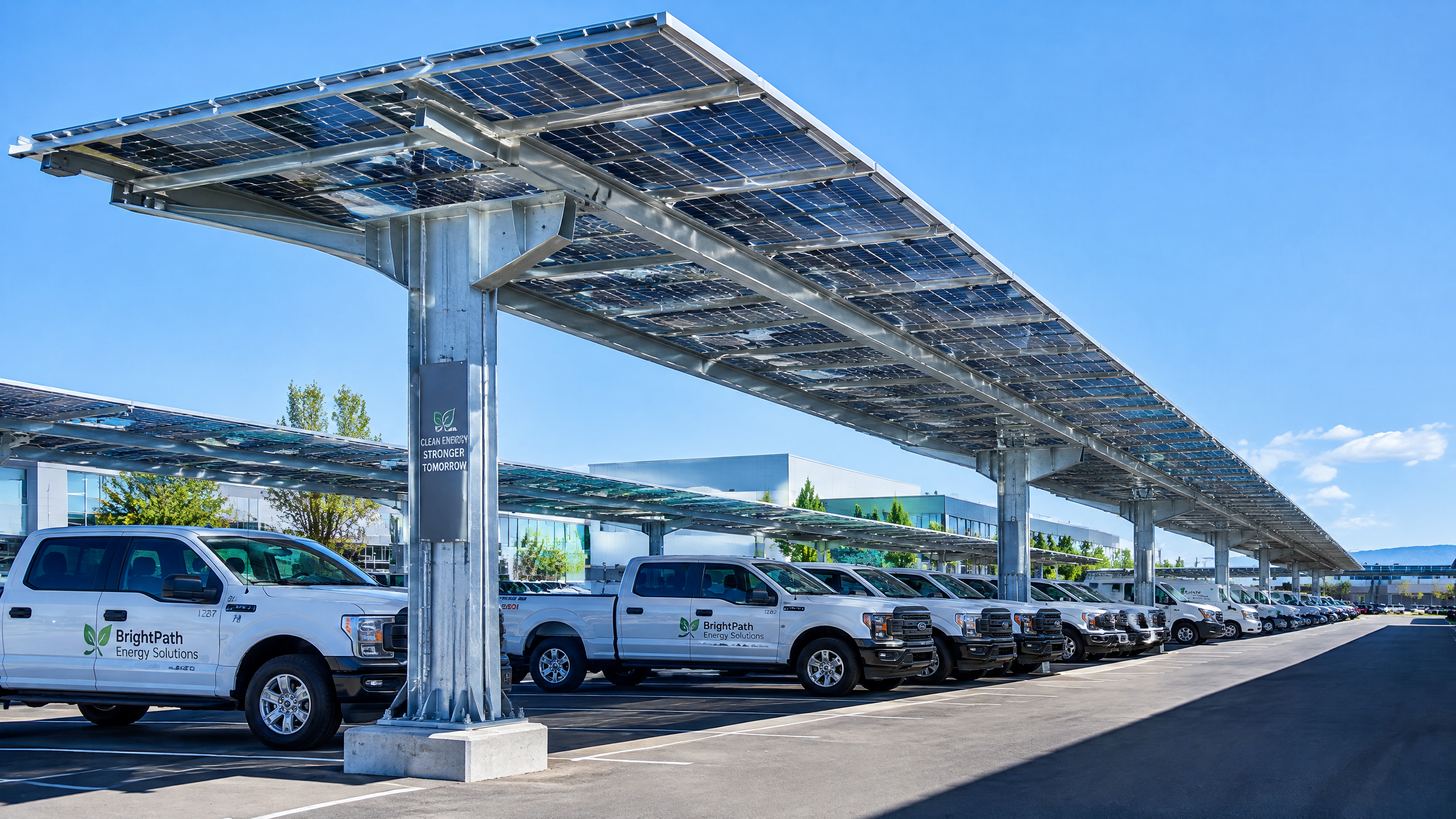
Short answer (first 140 words): Employers should treat a workplace solar carport as a combined parking, charging and energy asset that requires coordinated planning across facilities, fleet/HR, IT/energy and procurement. Scope this guidance to at-site parking lots or campus parking structures where the employer owns or controls vehicle bays and intends to install photovoltaic (PV) canopies that will serve employee and visitor parking, may support EV charging, and will be operated under employer governance (not public utility distribution). This guide excludes rooftop-only PV and grid-scale utility-owned arrays. It focuses on decisions about parking allocation, charging policy, accessibility, electrical capacity mapping, PV operations and maintenance (O&M), construction disturbance mitigation, stakeholder communication, and procurement governance.
Buyer context and scope boundary
- Audience: Facilities, sustainability, procurement and workplace mobility leads in employers (Europe/North America).
- Boundary: Employer-owned or leased parking; PV canopies that provide shading, generation and infrastructure for EV chargers. Not intended for municipal on-street installations or utility-owned solar farms. Assumes primary goals: employee convenience, decarbonisation, resilience and managed capital procurement.
Core principle
Plan the carport as layered responsibilities: site and civil (owner/facilities), structural and electrical engineering (designer/engineer of record), installation and commissioning (contractor), and ongoing PV/EV operations (owner/asset manager or O&M contractor). Define clear handoffs and decision points early to avoid scope gaps that cause delays, added costs or operational disruption.
Decision 1 — Parking and charging policy: who gets spaces, when and how Why policy matters
- The carport will physically reconfigure parking supply and create demand for electrical capacity and access control. A clear, enforceable policy prevents conflicts, ensures equitable access and limits liability exposure.
Define user categories and priorities
- Employee reserved vs. visitor bays: Decide how many bays are permanently reserved for employees, visitors, fleet vehicles, car-sharing or accessible parking. Use occupancy data (peak and off-peak) to set allocations. Policies should specify time limits and enforcement procedures.
- Fleet and charging priority: If employer vehicles or shared EVs require charging, reserve priority bays adjacent to charging infrastructure and include charging time limits in policy.
Charging policy and payment model
- Access control and payment: Decide if charging will be free, metered, or managed via workplace mobility programs. Pricing often balances operational recovery (electricity and maintenance) and incentivising right-sized usage. If employer chooses hardware-managed billing, specify whether vendor handles user accounts, RFID or network authentication.
- Managed vs. ad-hoc charging: A managed queue (reservation system) reduces dwell-time conflicts. Consider integration with employee access badges or a mobility app.
Enforcement and signage
- Legal and accessibility enforcement: Policies need to align with local accessibility rules and property signage requirements. Define enforcement responsibilities (security, parking services, third-party operator).
Decision 2 — Accessibility, code and pedestrian circulation Why accessibility and circulation are distinct decisions
- Carports change circulation (pedestrian paths, ramps, crosswalks) and require accessible bays and routes compliant with applicable standards; responsibilities differ by jurisdiction and ownership.
Accessible parking and route requirements
- Where U.S. Access Board guidance applies, ensure required accessible spaces, van-access aisles, and smooth accessible routes from carport bays to building entrances per Chapter 5 guidance [6]. In the EU, follow national implementations of accessibility in building regulations and the Energy Performance of Buildings Directive implications for accessibility and sustainable mobility [17].
- Assign design responsibility to the architect/engineer of record; owner must approve accessible bay counts and locations early to avoid costly rework.
Pedestrian safety and lighting
- Plan pedestrian paths to reduce crossing through traffic lanes beneath canopies. Provide continuous, well-lit, slip-resistant surfaces. Define lighting and emergency egress responsibilities between the carport supplier and the site electrical contractor.
Snow and drainage considerations (site-specific)
- If in climates with snow or heavy rain, plan for snow-shedding, snow-storage areas and surface drainage. Structural design and hydrology studies should address snow loads and runoff; see aluminum structural guidance and foundation requirements for decision inputs [12] [13].
Decision 3 — Electrical capacity, EV charging and grid interconnection Why electrical capacity is critical early
- Electrical upgrades are one of the most common causes of scope change. Early electrical capacity mapping informs charger count, meter arrangements and possible demand management controls.
Capacity assessment and phased provisioning
- Conduct an electrical service capacity study to map existing transformers, service rating and conduit pathways. If service is limited, consider staged charger roll-out, load management (smart charging) and segregated submetering for tenant billing. Utility interconnection requirements and distributed energy checklists should guide design [19] [20].
- Define responsibility: owner funds utility upgrades; the electrical contractor implements service and meter installations; interconnection application is typically owner-led with installer support.
EV charging hardware and network selection
- Select chargers by desired power level (Level 2 vs. DC fast charging) based on duty cycle and workforce profiles from workplace charging toolkits [20]. For DC fast chargers, budget for higher electrical upgrade complexity and civil works.
- If networked chargers are used, define data ownership and access, privacy requirements and cybersecurity responsibilities between employer and vendor.
PV and inverter siting relative to chargers
- Inverter and battery placements require secure equipment locations with service access and environmental protection. Ensure fire department and local code setbacks are considered. PV operations (monitoring and maintenance) must be coordinated with charger operations to avoid service conflicts [16] [18].
Decision 4 — Structural, foundation and corrosion protection Scope of structural decisions
- The structural system determines canopy spans, column locations and foundation types. These decisions impact striping, bay counts, and vehicle clearance.
Responsibility split and special inspection
- The structural engineer provides stamped calculations; owner must confirm design assumptions (vehicle loads, snow/wind actions per ASCE/SEI 7-22 or Eurocode 1 depending on jurisdiction) [1] [2]. For critical anchor and embed installations, coordinate special inspections as required by codes such as IBC Chapter 17 [5] and OSHA steel erection and concrete readiness rules [9] [10].
- Specify who provides anchor rods and base plates vs. who inspects installation (contractor vs. independent inspector). Use AISC guidance for anchors and installation best practices [3] [4].
Corrosion protection and material selection
- If steel is used, clarify galvanizing specifications and inspection acceptance per American Galvanizers Association guidance [11]. For aluminum framing, reference Alloy and tolerance standards and the Aluminum Design Manual for connections and tolerances [12] [13]. Specify paint and coating requirements per ISO 12944-2 where applicable [14].
Decision 5 — PV system operations, monitoring and maintenance Why O&M decisions affect lifetime performance
- PV O&M defines warranty compliance, performance guarantees and ongoing safety. Poorly defined O&M contracts cause energy yield loss and tenant relationship issues.
Define operational KPIs and reporting
- Specify KPIs: system availability, energy yield reporting cadence, inverter and DC string monitoring, and fault notification procedures. Refer to NREL best practices for PV installation and O&M to structure monitoring and maintenance agreements [16] [17].
Planned maintenance, emergency response and spare parts
- Agree on scheduled preventive maintenance (string cleaning, thermal inspections, torque checks) and spares inventory. Ensure clear response time SLAs for outages and accident response. Distinguish routine maintenance (O&M contractor) from capital repairs (owner).
Safety, isolation and arc-flash
- Require written isolation procedures and lockout-tagout for PV plus EV charging equipment. Document responsibility between building electrical staff and the PV system operator for safe access and for any emergency shutdown protocols.
Decision 6 — Construction disruption, site logistics and continuity Why construction logistics must be pre-planned
- Carport installation frequently occurs inside occupied workplaces. Poor logistics planning causes business disruption and safety risk.
Phasing, temporary parking and traffic management
- Prepare a phased construction plan that preserves critical parking for employees and visitors. Identify temporary parking locations (off-site or re-striped on-site) and communicate changes in advance. Include traffic management plans for peak arrival/departure times and coordinate with local authorities when road closures or driveway changes are needed [8].
Underground utilities and pre-dig clearance
- Locate existing utilities with utility locates; use 811 Before You Dig practices in the U.S. to prevent accidental strikes [9]. Define who is responsible for potholing, locating and marking utilities prior to excavation.
Site safety and contractor supervision
- Require contractors to follow OSHA steel erection and material handling regulations and site layout best practices; specify fall protection and site demarcation responsibilities [9] [10]. Assign a single site coordinator from the owner’s facilities team to interface with contractors.
Six-step buyer workflow
- Preliminary site and demand study
- Gather parking occupancy data, EV readiness, and rooftop/lot solar feasibility. Produce a scope document that lists required accessible bays, fleet needs and desired charger types.
- Select delivery approach and budget estimate
- Decide turnkey OEM, design-bid-build, or design-build. Obtain conceptual budgets and an electrical capacity screening from an engineer.
- Procure engineering and permitting
- Engage civil/structural and electrical engineers to produce permit-ready drawings; coordinate with utility for interconnection requirements and planning authority for accessibility compliance [1] [2][5][19].
- Tender and select contractors and O&M partner
- Issue procurement documents specifying carport products (consider /products/nordarch, /products/nordflat, /products/solargrid, /products/titan), materials/coatings, anchor and foundation requirements (/guides/carport-foundation-requirements), and PV acceptance tests [12] [11][16].
- Construction, commissioning and handover
- Implement phased temporary parking plan, perform special inspections per code, complete electrical interconnection, and commission PV/charger systems with documented test results. Provide as-built drawings and O&M manuals referencing maintenance best practices [5] [16][17].
- Post-install operations and governance
- Activate access and payment policies, start performance reporting, schedule preventive maintenance and review usage/charging metrics to adapt policy.
Procurement checklist (key contract clauses to include)
- Clear scope and responsibility matrix (design, foundations, electrical service, utility liaison).
- Performance acceptance criteria (PV availability, charger uptime, accessibility compliance).
- Special inspections and testing requirements assigned and paid responsibility.
- Warranty, spare parts obligations and response-time SLAs.
- Data ownership and privacy terms for charger and PV monitoring.
- Phasing and disruption clause: allowed work hours, noise limits and temporary parking provision.
Mid-article CTA If you want a site feasibility checklist tailored to your campus or a template procurement scope, request a custom pack at /inquiry or email info@carportiva.com. We can provide product suggestions such as /products/solargrid or /products/titan for combined PV and charging canopy solutions.
Two useful decision tables
Table 1 — Charging hardware selection considerations
| Decision factor | Short-stay employee parking | Long-stay employee parking | Fleet/shared vehicles |
|---|---|---|---|
| Typical dwell time | 2–4 hours | 8+ hours | Variable, mission-critical |
| Recommended power | Level 2 (7–22 kW) | Level 2 or lower powered shared stations | Mix Level 2 and DCFC depending on turnaround |
| Load management | Useful for peak shaving | Can be scheduled overnight | Required for reliability and prioritisation |
| Payment/billing | Employer-managed or free | Time-based billing possible | Centralised fleet billing and prioritisation |
Table 2 — Who owns which responsibilities (contractual examples)
| Activity | Employer (owner) | Designer / Engineer | Contractor / Installer | O&M Provider |
|---|---|---|---|---|
| Define parking policy | X | |||
| Structural design and calculations | X | |||
| Foundation construction | X (fund) | X | ||
| Anchor/install verification | X | Inspector (special) | ||
| Utility interconnection application | X | X (support) | ||
| PV monitoring and O&M | X | |||
| Charger user data management | X (policy) | Vendor | Vendor/O&M |
Procurement templates and governance notes
- Use the responsibility table above as an exhibit in contracts. Include a RACI (Responsible, Accountable, Consulted, Informed) for critical milestones: permit submission, foundation completion, electrical rough-in, commissioning, and final acceptance.
- Require the contractor to provide anchor bolt layout prior to concrete pour and to coordinate special inspection appointments per IBC Chapter 17 when embedded items affect structural performance [5].
- For galvanised steel or coated steel components, specify inspection requirements and acceptance criteria referencing the American Galvanizers Association and ISO coating standards [11] [14].
Construction disruption & communications plan
- Communicate early and often: publish phased parking maps, temporary access routes, expected noise windows and safety exclusions. Provide alternative transport options where possible and notify affected employees at least two weeks ahead of major lane closures.
- Daily site updates: owner site coordinator should request daily short bullet updates from the contractor during critical phases (foundation, anchor, erection, electrical tie-in) and share with HR and security teams so visitor routing and deliveries can be managed.
Risk management and regulatory touchpoints
- Utility coordination: Engage the utility early for service capacity and metering requirements; use the Department of Energy interconnection checklist as a baseline for distributed generation steps [20].
- Civil runoff and stormwater: Confirm that canopy runoff does not create localized flooding or exceed site stormwater design; coordinate with civil engineer and reference EPA guidance on urbanization and stormwater [8].
- Safety and steel erection: Ensure contractors comply with OSHA standards for steel erection, keeping clear of loads and site layout requirements to protect employees and passersby [9] [10].
Operationalising the asset and data
- Define data flows: PV generation data, charger session logs and energy metering must be assigned data owners and retention policies. Decide if Carportiva or a third-party O&M vendor will provide dashboards and alerts.
- Energy optimisation: Consider integrating PV production forecasting and building energy management to maximise on-site consumption during peak production and reduce export to the grid where beneficial.
FAQ
Q: Will a carport always remove the need for separate rooftop PV? A: Not always. Carports and rooftops serve different site constraints and planning objectives. Carports add shading, weather protection and direct integration with parking and EV charging; rooftop PV may be complementary. Site-specific analysis is required [16].
Q: Who applies for the grid interconnection and permits? A: The owner typically applies or authorises the interconnection application; installers and engineers prepare documentation and support submittals. Utilities vary in their requirements and timelines; start this activity early [19] [20].
Q: How many chargers should we install? A: Charger count depends on current and projected EV penetration, employee dwell times, fleet needs and available electrical capacity. Use occupancy data and a staged approach—start with enough chargers to meet early demand and design electrical infrastructure to scale.
Q: What accessibility rules apply to carports? A: Accessible parking and routes must comply with the relevant national/adopted standards—e.g. U.S. Access Board guidance for parking and Chapter 5 specifics for accessible bays; EU members apply national accessibility rules in line with the Energy Performance of Buildings Directive [6] [17].
Q: How should we manage construction noise and employee inconvenience? A: Define restricted work hours, provide advance notice, offer alternate parking and coordinate deliveries. Use a site coordinator to issue daily bulletins during disruptive phases.
Conclusion
A workplace solar carport project succeeds when employer stakeholders treat the installation as a cross-functional program: parking policy, accessible design, electrical capacity, structural integrity and PV/charger operations must be specified with clear contractual responsibility boundaries. Early utility engagement, clear phased construction plans, and an O&M-ready handover reduce long-term operational friction. Use a staged rollout where electrical capacity is constrained and centralise governance for charging policy and data ownership to maintain fairness and operational clarity.
Closing CTA For a tailored scope-of-work, sample RACI, or product match (consider /products/nordarch, /products/nordflat, /products/solargrid, /products/titan) request a feasibility pack at /inquiry or email info@carportiva.com.
References
Bring the actual project brief to the engineering table.
Share your location, layout, target application and available technical inputs. Carportiva can help identify the relevant product-interface information before a project-specific commercial discussion.
Request a project discussion