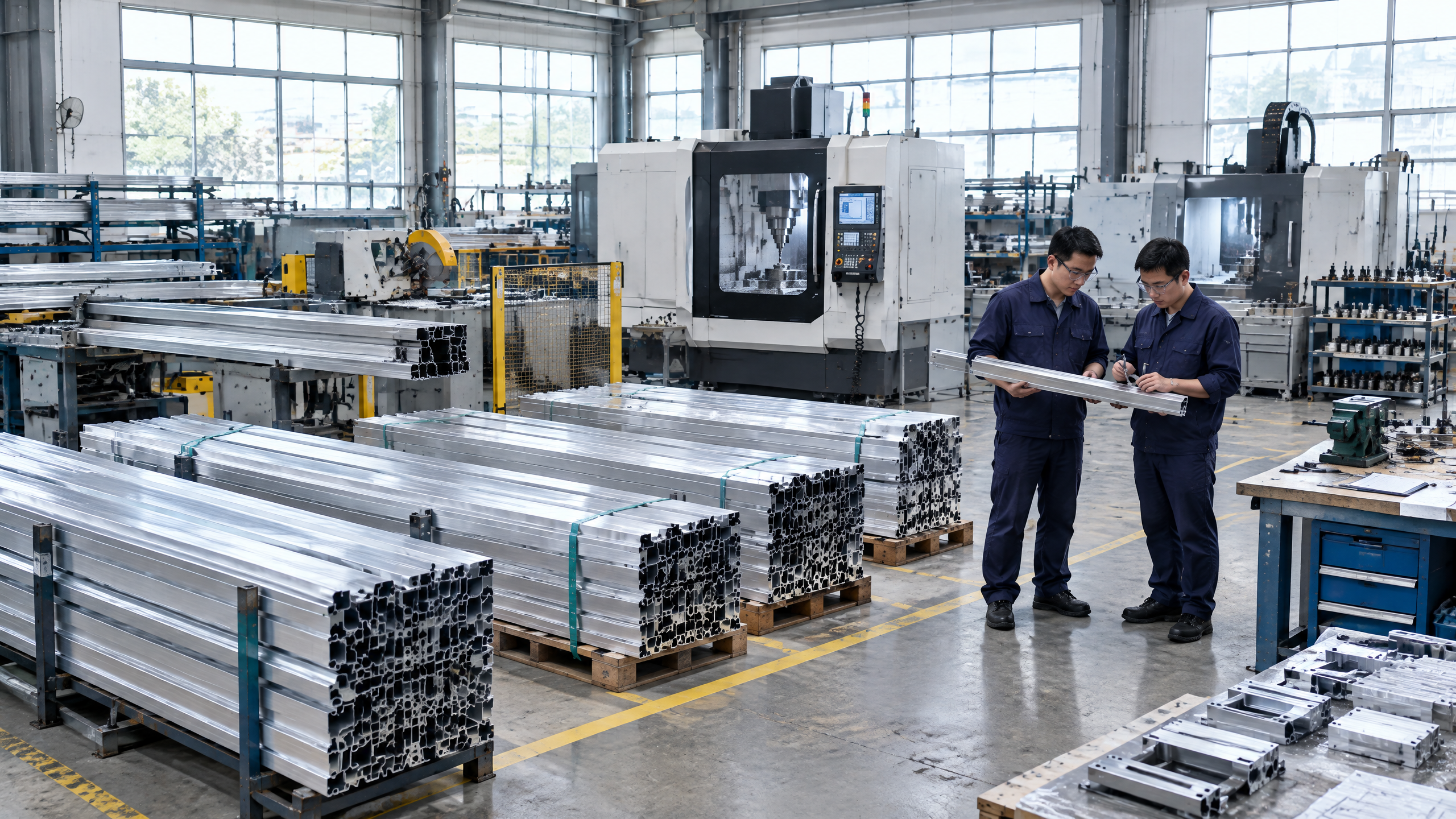
Direct answer (120–180 words) Confirm that a commercial carport manufacturer project quotation explicitly defines scope, deliverables, responsibilities and measurable acceptance criteria. At minimum, require itemised scope of supply (structures, fixings, foundations allowance, electrical interfaces), engineering drawings (GA, elevations, connection details), the solar carport manufacturer pv interface specification, factory documentation and inspection plans, and packing and shipping terms including commercial carport manufacturer export packing. Validate the supplier with a solar carport manufacturer supplier evaluation and evidence of solar carport manufacturer factory capability: factory layout, production equipment, sample builds, and inspection records. Insist on commercial carport manufacturer quality documentation (material certificates, test records, FAT/FPI plans) and clear Incoterms and shipping milestones. Do not accept ambiguous handoffs: make installers, structural engineers, utility providers and authorities responsible for site-specific approvals. Use the quotation as a contractual baseline — confirm change control, acceptance tests and spares before you sign.
Why the quotation must be a decision document
A quotation is more than a price list: it is the operative specification that links design, procurement and delivery. For B2B purchasers the commercial carport manufacturer project quotation must be precise enough to permit comparison, contract formation and risk allocation. Use the quotation to lock down what the manufacturer will supply, what your organisation or other parties must deliver on site, and the criteria for inspection and acceptance. This reduces ambiguity during manufacturing, transport and installation and avoids common disputes over “scope creep” or undocumented assumptions.
Scope boundaries and final authorities This guide explains what to confirm in the quotation and how to evaluate supplier capability and delivery arrangements. It does not and cannot promise structural capacity, permit approval, building-code compliance, lead time, price, energy yield or warranty. Final, site-specific determinations (structural capacity, permitting, electrical interconnection, commissioning and sign-off) must be made by locally qualified structural engineers, authorities having jurisdiction, utility providers and certified installers.
Key elements to confirm in the commercial carport manufacturer project quotation
- Clear scope of supply: itemised parts (canopies, posts, gutters, fasteners), accessories, PV racking if provided, recommended foundations or geotechnical allowances.
- Drawings and technical deliverables: GA drawings, elevations, connection details, module layout and solar carport manufacturer pv interface drawings.
- Material specifications: aluminium grade, surface finish, protective coatings or galvanizing references.
- Quality and test documentation: commercial carport manufacturer quality documentation, including mill certificates, production inspection plans and FAT procedures.
- Packing and logistics: packing type, packaging lists and transport marks—commercial carport manufacturer export packing details for sea/air/road.
- Commercial and legal: Incoterms, payment milestones, variation/change control, and dispute resolution.
Documents and deliverables to request
Ask the supplier to attach or commit to specific deliverables in the quotation:
- General arrangement (GA) drawings and 3D model files where available.
- Connection and anchor details showing tolerances and embedment.
- Factory drawings for shop fabrication and a production schedule.
- Material certificates and traceability for structural elements.
- Factory acceptance test (FAT) plan and sampling protocol.
- Packing list and containerisation plan addressing commercial carport manufacturer export packing.
- A list of required site works and interfaces to be completed by others.
Decision table: Minimum quotation content and who signs off
| Quotation item | What to confirm | Who should approve |
|---|---|---|
| Scope of supply (line-items) | Items listed with part numbers, quantities, exclusions | Buyer + Project Engineer |
| GA drawings & tolerances | Issue for manufacture version and change control | Structural Engineer |
| PV interface | Exact mounting points, cable routes, module footprint | Solar EPC / Electrical Engineer |
| Commercial carport manufacturer export packing | Packaging type, unit loads, container sizes, handling marks | Logistics / Shipping Lead |
| Commercial carport manufacturer quality documentation | Material certificates, inspection plans, FAT schedule | QA Manager / Third-party Inspector |
Assessing supplier and factory capability
A robust solar carport manufacturer supplier evaluation should confirm the manufacturer’s ability to deliver to the agreed specification, at scale and with repeatable quality. Key evidence to request:
- Factory layout and production flows showing fabrication, welding, finishing and QA areas.
- List of primary fabrication equipment (press brakes, laser cutters, CNC routers) and sample production capacity statements.
- Evidence of previous projects of comparable size and complexity (references).
- Inspection and test reports and any third-party FAI or FAT results.
Ask for a visit or a scheduled remote factory walk-through and include a scope for witnessed testing if required.
Decision table: Factory capability checklist
| Capability | Evidence to request | Notes |
|---|---|---|
| Production capacity | Weekly/monthly fabrication output, sample schedules | Confirms ability to meet order quantity |
| Quality control | Inspection plans, traceability records, commercial carport manufacturer quality documentation | Verifies repeatability |
| Skilled labour | CVs or descriptions of key personnel (welders, supervisors) | Assesses workmanship risk |
| Handling & packing | Photos/diagrams of export packing and palletisation | Ensures suitability for transport |
| PV cooperation | Procedures for module mounting and pv interface coordination | Relates to solar carport manufacturer pv interface |
Include the phrase solar carport manufacturer factory capability and solar carport manufacturer supplier evaluation in your assessment records and ensure each item in the checklist is evidenced in the quotation or attachments.
Logistics, export packing and international delivery
Terms and packaging matter early. Confirm the packing method and handling units so buyers can plan for transport, crane lifts, and customs clearance. Commercial carport manufacturer export packing should specify crate sizes, dunnage, corrosion protection for long sea voyages, weight and volume, and unit markings for easy loading and customs inspection.
Address Incoterms and documentation: commercial invoices, packing lists, bill of lading/air waybill, certificate of origin and any export licences. For cross-border projects, coordinate the shipping plan with customs brokers and local import rules well before shipment. Where customs duties and inspections are material to cost or schedule, explicitly state responsibilities and handover points in the quotation and contract [3][4].
Installation interfaces and PV coordination
Clarify who supplies the PV modules, inverters and electrical balance-of-system items and who integrates mounting rails or fasteners. The quotation must state the solar carport manufacturer pv interface — the mechanical and electrical handover points, cable entries, earthing arrangements and clear module layout tolerances. Confirm whether the supplier provides:
- Module clamps, mid-clamps and end-clamps or whether the PV installer supplies them.
- Cable trays, conduits and combiner box mounting provisions.
- Earthing studs and bonding details.
Define responsibilities for on-site trimming, minor fitting or shimming and who verifies module alignment and torque values on completion. Make these interface responsibilities contractual to avoid gaps between manufacturer scope and EPC installation.
Quality assurance, inspection and acceptance
Quality documentation must be actionable. Request the commercial carport manufacturer quality documentation set and agree inspection points: pre-shipment inspection, witnessed FAT and on-site acceptance. Typical documentation to require in the quotation:
- Mill/test certificates for structural materials.
- Welding procedure and welder qualifications, where applicable.
- Finished-coating inspection records or surface-finish standards.
- Pre-shipment images and packing verification.
Plan for an agreed acceptance test at delivery: visual inspection, dimensional checks against GA drawings, and spot checks against material certificates. A third-party inspection clause is appropriate for higher-risk or high-value projects.
Cost drivers, trade-offs and procurement levers
Cost drivers commonly included in the quotation are material grades, finish type, fabrication complexity, lifting and handling requirements, export packing and transport mode. Trade-offs to explore during negotiation:
- Finish vs lifecycle: premium coatings raise initial cost but can reduce maintenance.
- Modular packing vs loose components: denser packing saves transport but increases on-site handling.
- Localised manufacturing vs factory consolidation: local assembly reduces transport but may add labour and quality variability.
Do not accept vague “allowances” for civil works or site preparation; request priced line-items or explicit exclusions.
Contractual items to lock in and change control
Before signing, ensure the contract references the accepted commercial carport manufacturer project quotation and attaches all drawings, QA plans and packing lists. Include:
- Change control procedure for variations and cost/time impacts.
- Inspection and acceptance criteria with hold points.
- Spare parts list and delivery terms.
- Insurance and risk transfer terms linked to the chosen Incoterm.
- Documentation handover at completion (as-built GA, certificates, maintenance guidance).
Do not rely on verbal commitments; require written amendments to remain within the contract.
Six-step buyer workflow (named steps)
- Define Scope & Interfaces — Produce a clear scope of supply and a site responsibility matrix, including the solar carport manufacturer pv interface requirements.
- Issue Detailed RFQ — Request GA drawings, material specs and commercial carport manufacturer export packing details in the RFQ.
- Evaluate Suppliers — Perform a solar carport manufacturer supplier evaluation and review solar carport manufacturer factory capability evidence.
- Negotiate Terms — Agree Incoterms, inspection regimes, payment milestones and commercial carport manufacturer quality documentation deliverables.
- Finalise Contract & Witness Tests — Sign contract with the accepted quotation as an annex and schedule FAT/FPI as required.
- Receive, Inspect & Handover — Inspect deliveries to the acceptance checklist and complete the formal handover to installer.
Mid-article call-to-action Ready to request a detailed quotation that includes factory documentation and packing plans? Start your enquiry with Carportiva: /inquiry or email info@carportiva.com. See the Carportiva system range and our sourcing guides for standard product options.
Approval matrix for quotation acceptance
| Approval area | Required evidence | Approver |
|---|---|---|
| Technical scope | Signed GA drawings and detailed parts list | Project Engineer |
| Quality | Commercial carport manufacturer quality documentation and FAT plan | QA Manager |
| Logistics | Export packing list and shipping schedule | Logistics Manager |
| Financial | Final pricing and payment schedule | Procurement Director |
| Site interface | Pv interface drawings and installer responsibilities | Solar EPC / Site Manager |
Practical tips for negotiations and red flags
- Insist on a single contractual quotation document that attaches all drawings and QA plans — avoid fragmented promises.
- Red flag: “scope to be confirmed” or open-ended allowances for site works.
- Require packing photos before shipment and a signed packing list at handover.
- Confirm who will sign-off on deviations discovered on arrival and the time window for raising claims.
Related sourcing terms
In project research, these connected terms should be reviewed against the same live brief: solar carport manufacturer project quotation. They are search phrases, not separate technical guarantees.
FAQ
Q: Does a supplier quotation confirm structural strength or compliance with building codes? A: No. Quotations should provide drawings and materials but not final structural approvals. Local structural engineers and authorities must complete site-specific verifications.
Q: What is the difference between export packing and normal packing? A: Export packing addresses long-haul transport, corrosion protection, unitisation and customs marks; confirm commercial carport manufacturer export packing in the quotation.
Q: Should the quotation include PV modules and inverters? A: Only if explicitly stated. If PV equipment is excluded, the quotation must describe the pv interface so installers can integrate modules and cable runs without rework.
Q: How do I confirm factory quality capability remotely? A: Request commercial carport manufacturer quality documentation, production photos, inspection plans, and schedule a remote or on-site factory walk. Consider third-party inspection for higher risk.
Q: Who is responsible for on-site modifications? A: The quotation must specify site works and handover responsibilities. Any modifications outside the supplier scope should be documented and priced as variations.
Conclusion
A rigorous commercial carport manufacturer project quotation converts scope, technical deliverables and logistics into contractual commitments. Confirm detailed drawings, the solar carport manufacturer pv interface, commercial carport manufacturer export packing, and commercial carport manufacturer quality documentation; evaluate the supplier’s factory capability and supplier performance evidence; and lock acceptance tests and change control into the contract. Use the six-step workflow to manage the process and involve local engineers, authorities and installers to make final site-specific decisions.
For a project-ready quotation that includes factory documentation and packing plans, contact us: /inquiry or info@carportiva.com. For standard product options see our Carportiva system range and all systems. For further procurement resources, visit our sourcing guides.
References
- American Galvanizers Association: https://galvanizeit.org/
- International Organization for Standardization: https://www.iso.org/
- International Chamber of Commerce Incoterms: https://iccwbo.org/business-solutions/incoterms-rules/
- U.S. Customs and Border Protection import guidance: https://www.cbp.gov/trade/basic-import-export
Keep the project brief connected.
Bring the actual project brief to the engineering table.
Share your location, layout, target application and available technical inputs. Carportiva can help identify the relevant product-interface information before a project-specific commercial discussion.
Request a project discussion