Direct answer (120–180 words)
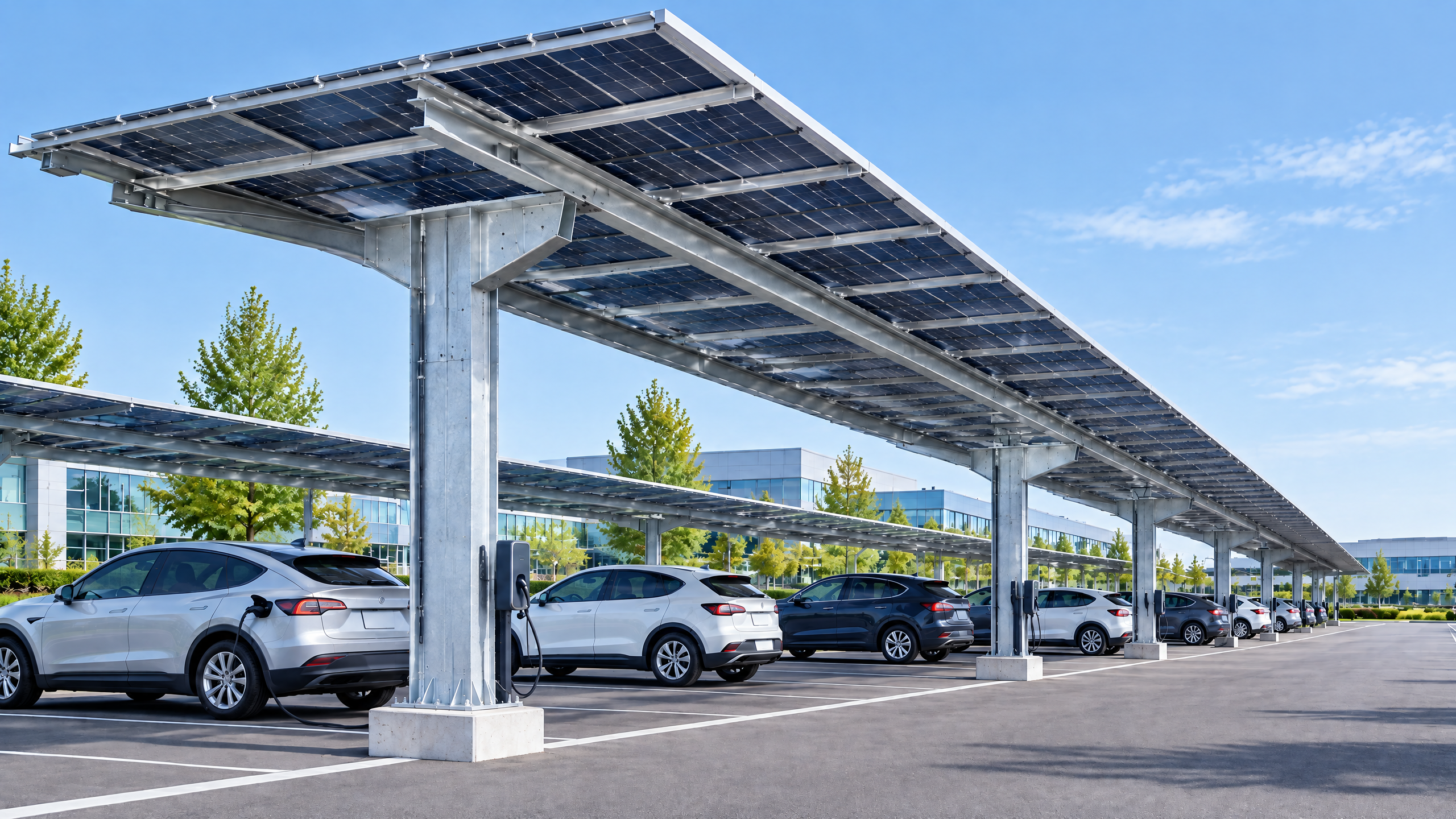
For any commercial or industrial project that includes a solar parking structure, the project team must treat the solar parking structure manufacturer as a primary technical supplier whose deliverables directly affect structural safety, electrical performance, schedule and warranty outcomes. Confirm the manufacturer’s responsibility boundaries (what they supply, design-assist vs. turnkey), ask for stamped structural calculations and shop drawings, verify PV equipment coordination and electrical pathway planning with your electrical contractor, and require documented factory quality control and acceptance procedures. Ensure the manufacturer demonstrates experience with the solar carport structural interface to foundations and adjacent buildings, clarifies maintenance access planning and module/inverter service zones, and provides clear utility and permit interface inputs for interconnection and local approvals. Every assertion about load capacity, lead time, price, energy yield or warranty must be validated on a documented project basis with local qualified professionals, installers, utilities and authorities.
Buyer context and scope boundary
Who this guide is for
- Distributors, architects, contractors, developers, solar EPCs and fleet operators considering aluminium commercial carports, industrial fleet shelters or combined PV + EV canopies.
- Decision owners responsible for procurement strategy, technical due diligence, schedule, budget and long-term operations.
What this guide covers
- How to evaluate a solar parking structure manufacturer as a supplier and technical partner.
- The project, procurement and implementation implications of the manufacturer’s deliverables—structural system, integration details, on-site interfaces, factory evidence and handover items.
- Practical checklists, decision tables and a six-step buyer workflow you can apply on specific projects.
What this guide does not cover
- Detailed site-specific structural design, foundation specifications, final electrical design, utility interconnection approval or formal permitting. These items require a documented project basis and local qualified professionals, installers, utilities and authorities, and must be confirmed on a per-project basis.
Scope boundary statement (must-read)
- Site-specific structural capacity, foundations, permits, electrical design, approvals, lead time, price, energy yield and warranty require a documented project basis and relevant local qualified professionals, installers, utilities and authorities. The manufacturer’s general data and past proposals inform feasibility but do not replace project-specific designs, stamped drawings or local approvals.
Core decision principle
Select the manufacturer that minimizes total project risk across three dimensions: design integration, evidentiary documentation, and operational sustainment.
- Design integration: Can the manufacturer reliably integrate with the site’s structural and electrical systems (including solar carport structural interface and grounding, module and inverter locations, and EV load points)?
- Evidentiary documentation: Will the manufacturer deliver the technical documents your stakeholders need—stamped calculations, shop drawings, BOM, material certificates, load tests, and acceptance procedures?
- Operational sustainment: Are maintenance access planning, spare parts, warranty boundaries and service response clearly defined?
Why this matters
- Solar parking structures sit at the intersection of building, electrical and energy systems. A weak interface (structural or electrical) creates constructability delays, unsafe conditions or under-performing systems. Evaluating a supplier only on price or lead time is insufficient; strong documentation and coordination capabilities materially reduce downstream cost and schedule risk.
Planning inputs: what you must collect before engaging manufacturers
Before requesting detailed proposals, assemble the following inputs. These reduce ambiguity and let manufacturers produce comparable, contract-ready proposals.
Site and program data
- Site survey or topographic drawing with existing contours, geotechnical report, and utility easements.
- Parking count, bay geometry, required clearances, and any EV charging locations.
- Local snow, wind and seismic criteria (code references or jurisdiction standards).
- Access restrictions for delivery and crane operations.
Electrical and energy data
- Target system size and performance objectives (kWac/kWp, expected annual energy or fleet load coverage). Consider using PV production estimators such as PVWatts for early planning and energy yield estimates [2].
- Metering and interconnection points, existing service capacity, and planned upgrades.
- EV charging load profiles if applicable (charging power per bay, duty cycles); reference national EV infrastructure resources for regulatory and siting guidance where relevant [3].
Stakeholders and approvals
- Local building department requirements and permit lead times (utility and permit interface checkpoints).
- Utility interconnection process and queue; identify responsible party for interconnection application and system studies (see FERC resources for interconnection frameworks where applicable) [4].
- Ongoing owner maintenance responsibilities and access policies.
Procurement and schedule constraints
- Target procurement model (manufacturer supply-only, design-assist, or turnkey supply + installation by manufacturer or factory-qualified installer).
- Long-lead item thresholds (e.g., custom extrusions, powder-coated assemblies, inverters) and acceptable delivery windows.
Why documented inputs matter
- Clear inputs remove ambiguity in manufacturer proposals and let you compare apples-to-apples. They also frame responsibilities in contract documents so that the solar parking structure manufacturer knows what must be coordinated versus what the buyer/EPC will deliver.
Technical specification and interfaces
This section identifies the critical technical domains and interface points that a project team must confirm with any prospective solar parking structure manufacturer.
- Structural interface: foundations, loads, and design responsibility
- Confirm whether the manufacturer supplies foundation drawings or only column baseplates and anchor details. The solar carport structural interface to site foundations must be explicit: who provides anchor bolt layout, embedment, and design for soil conditions?
- Request stamped structural calculations for the superstructure that reference local code load combinations (dead, live, wind, snow, seismic). If the manufacturer offers only catalogue data, require a project-specific stamp or a statement that their drawings are for reference only.
- Clarify uplift and moment loads at baseplates so foundation engineers can design footing or pile systems.
- Envelope and building code considerations
- Verify compliance with local building codes for roof area, fall protection, and egress where applicable.
- If the carport abuts existing structures, clarify connection details and differential movement allowances.
- Solar array layout and PV equipment coordination
- Confirm module attachment method, tilt and row spacing to achieve target energy yield and maintenance access.
- Define PV equipment coordination: string routing, inverter location, combiner and junction box placements, and DC-to-AC transition points. Ensure PV equipment coordination responsibilities and timing among manufacturer, PV module supplier and balance-of-system (BOS) contractor.
- Electrical pathway planning and routing
- Map electrical pathway planning from module string combiner locations through inverter locations to the main service or point of interconnection.
- Confirm conduit and cable tray allocation, minimum clearances, and equipment vaults. Define who supplies cable trays on the structure versus the electrical contractor supplying conductor, pulls, terminations and protection equipment.
- Grounding, lightning protection, and bonding
- Ensure manufacturer specifies structural grounding points and conductor attachment details compatible with electrical design and local code.
- Clarify responsibilities for lightning protection if required by code or owner risk assessment.
- Maintenance access planning
- Define module access zones, inverter service clearances, required fall protection anchor points and how routine cleaning or replacement will be performed.
- Require the manufacturer to show maintenance routes and lift/crane access where necessary.
- Drainage, waterproofing and corrosion management
- Aluminium structures are corrosion resistant, but interface with steel anchors, fasteners and substrate must be specified (coatings, washers, isolation materials). Request surface finish and coating specifications and expected maintenance cycles.
- EV integration (if applicable)
- For combined PV + EV solutions, confirm EV load management, charger siting, AC distribution panels and whether the manufacturer provides charger pedestals or only conduit/space provisions.
Decision table: high-level interface responsibilities
| Interface domain | Typical manufacturer responsibility | Typical buyer/EPC responsibility |
|---|---|---|
| Superstructure supply | Fabrication, finish, attachment points, stamped drawings for superstructure load path | Foundations, anchor bolt design unless manufacturer provides site-specific foundation drawings |
| PV mounting and module clamps | Attachment system, rail/extrusion layout, site-specific module layout | Module supply and electrical interconnection (stringing) unless bundled |
| Cable trays/conduit on structure | Cable tray supports, clamps, access points | Conduit/cable supply, pulling, terminations, connections to main service |
| Grounding | Structural bonding points and required conductor lugs | Grounding conductor sizing and final installation unless bundled |
| Maintenance access | Walkways, anchor points and service zones | Routine maintenance execution and fall protection equipment |
Note: boundaries vary by contract type; make them explicit in the purchase order or contract.
References for energy and interconnection planning
- For early-stage energy yield estimates, use tools like PVWatts [2] and solar resource data from national labs such as NREL [1].
- For interconnection policy context and process mapping, consult regional transmission or interconnection guidance; FERC provides resources on generator interconnection frameworks [4].
Procurement and factory evidence: what to request and why
A competent manufacturer should provide a structured package of evidence that enables review, permitting and construction. Below is a prioritized list of documents to require during procurement.
Essential procurement deliverables
- Statement of Work (SoW) or scope matrix: explicit delineation of manufacturer responsibilities, buyer/EPC responsibilities, and exclusions.
- Shop drawings and material list (BOM): show member sizes, connection details, coating/finish, fastener types and torque requirements.
- Project-specific, stamped structural calculations: when the manufacturer is responsible for the superstructure. If the manufacturer cannot produce stamped calculations, contractually require coordination with a local engineer to obtain them.
- Fabrication and erection drawings: include weld schedules, bolt grades and torque specs.
- Foundation interface drawings and anchor bolt templates: either provided by the manufacturer for foundations or confirmed dimensions for the buyer’s foundation designer.
- Material certificates: aluminium alloy grades, coating and paint specifications, fastener material certificates.
- Factory Quality Control (FQC) plan: inspection points, weld inspection criteria, dimensional checks, and non-conformance reporting.
- Factory Acceptance Test (FAT) procedure: for mechanical assemblies and electrical pre-assembly if applicable (e.g., integrated inverter enclosures).
- Delivery and packaging plan: transport constraints, lifting points, on-site handling requirements.
Desirable procurement deliverables
- Interface and coordination drawings showing PV module layout and inverter locations in context with cable tray routes and clearances.
- As-built revisions procedure and BIM/CAD model handover.
- Spare-parts lists and recommended spares for ten-year operations.
- Typical installation methodology and sequencing documents (e.g., how to erect columns, run rails, attach PV modules).
Decision table: evidence checklist and pass/fail acceptance criteria
| Document | Why it matters | Minimum acceptance criteria |
|---|---|---|
| Shop drawings | Basis for fabrication and permits | Detailed geometry, connection details, material callouts, anchor bolt template |
| Stamped structural calculations | Verify load capacity and code compliance | Stamped by qualified local engineer or acceptable jurisdictional stamp |
| BOM & material certificates | Ensure material compliance and corrosion management | Alloy/grade and certification traceability for primary members and fasteners |
| Factory QC & testing plan | Reduces rework and site delays | Defined inspection points, acceptance criteria and NCR process |
| FAT procedure | Confirms assemblies before shipping | Step-by-step checks, witness requirements and acceptance sign-off |
| Coordination drawings (PV & electrical) | Prevents clashes and rework | Show inverter, combiner and conduit pathway clearances in situ |
Red flags to watch for
- Catalogue data presented as project-specific without stamped calculations.
- No factory QA or FAT process described.
- Unclear responsibility for anchor bolt tolerances and foundation tolerances.
- Missing electrical pathway allocations or lack of coordination with your electrical engineer.
Site installation and operations
Practical considerations during installation and for long-term operations. A manufacturer’s documentation and personnel competency determine how smoothly site work proceeds.
Pre-installation checks
- Site verification: confirm as-built grades, anchors installed per template, and clear crane access before material arrival.
- Pre-assembly mockups: require a representative mockup for complex connection details when practical (especially at scale or for novel interfaces).
- Lifting and sequencing plan: manufacturer should provide lifting points, safe-handling instructions and erection sequence.
Installation roles and responsibilities
- Clarify who will provide site supervision, erection crews, and electrical installers. If the manufacturer supplies a factory-trained crew, verify their competence and insurance coverage.
- Confirm interface coordination for trades: civil works for foundations, electrical for meter and terminations, and traffic control for parking disruptions.
Site quality assurance and inspection
- Witness points: specify key erection milestones that require owner or engineer inspection (e.g., anchor bolt tolerance, primary weld quality, final torque checks).
- Non-conformance handling: require documented NCR/rectification processes and timelines.
Commissioning and handover
- Pre-commissioning checks: torque verification, grounding continuity tests, labeling and signage, and safe-access verification for inverters/chargers.
- Handover package: as-built drawings, maintenance manuals, spare parts list, and stamped completion certificates.
Operations and maintenance (O&M)
- Maintenance access planning should be explicit in the contract. Confirm how modules will be cleaned, how inverter replacements are performed and where crane access might be needed.
- Include an O&M plan covering routine inspections, electrical checks, and corrosion monitoring.
- Warranty reporting process: a single point of contact and documented SLAs for response times and defect resolution.
Decision table: responsibilities matrix (example)
| Task | Manufacturer | Buyer/EPC | Comment |
|---|---|---|---|
| Supply of structural canopies | X | Manufacturer | |
| Foundation excavation & concrete | X | Typically buyer/EPC; manufacturer provides templates | |
| Mounting rails & PV mounting | X (if bundled) | Confirm if PV modules included | |
| Cable trays on canopy | X | Manufacturer may supply supports; buyer supplies cables | |
| Electrical terminations & interconnection | X | Usually electrical contractor responsibilities | |
| Commissioning & handover | X (support) | X | Shared responsibility; define in SoW |
Note: adapt per contract. Avoid assumptions; write these into the order.
Implementation risks and mitigations
Common sources of schedule, cost and performance issues in solar parking structure projects, and pragmatic mitigations to include in procurement and project planning.
Risk: Unclear scope boundaries leading to rework
- Symptoms: disagreement over who supplies anchor bolts, cable trays or conduit.
- Mitigation: a clear scope matrix in the SoW and purchase order that lists responsibilities and deliverables.
Risk: Incomplete structural information for foundations
- Symptoms: foundation contractor cannot proceed without stamped anchor templates or load data.
- Mitigation: require anchor bolt templates and nominal load envelopes with tolerance callouts as part of initial submittal. If the manufacturer cannot deliver site-specific foundation drawings, designate the buyer’s structural engineer to adapt shop drawings and seal the foundation design.
Risk: Utility interconnection and permit delays
- Symptoms: interconnection study requests additional equipment or islanding controls; permit departments request details not provided.
- Mitigation: early engagement with utility and permitting authority; ensure the manufacturer provides drawings that show point-of-interconnection details and conduit routing for meter locations. Document responsibility for interconnection application and submittal ownership. Consult FERC or regional interconnection resources for process expectations [4].
Risk: Misaligned electrical pathways and spacing conflicts
- Symptoms: conduit/cable conflicts with structural supports; insufficient clearance for inverter service.
- Mitigation: require coordination drawings and clash detection during submittal. Hold a coordination meeting with manufacturer, electrical contractor and PV vendor pre-fabrication.
Risk: Lead-time and supply chain variability
- Symptoms: extended delivery times for custom extrusions or inverters.
- Mitigation: define long-lead items in the contract, include milestone deliveries, and consider staged procurement or acceptance of equivalent components with pre-approved alternates.
Risk: Warranty confusion
- Symptoms: unclear warranty boundaries between structure, PV modules, inverters and installation labor.
- Mitigation: request a consolidated warranty table that outlines warranties, durations and claim processes for structural components versus PV components and installers.
Risk: Maintenance access not planned
- Symptoms: inverters or modules installed without safe service routes leading to costly mobilization for repairs.
- Mitigation: require maintenance access planning drawings and include minimum clearances and pad spaces for inverter replacement.
Operational risk: energy yield underperformance
- Mitigation: use PV resource data and production modeling (e.g., PVWatts) during design; include acceptance tests and comparison protocols for first-year production [2][1].
Six-step buyer workflow (named)
A practical, repeatable six-step workflow to select and engage a solar parking structure manufacturer. Use this as the project’s procurement backbone.
Step 1 — Prepare project basis and constraints
- Deliverables: site survey, geotechnical report, electrical service sketch, parking layout, program of spaces, target system size, and procurement model selection.
- Purpose: provide consistent inputs to all bidders to achieve comparable proposals.
Step 2 — Issue a structured Request for Information (RFI) or Request for Proposal (RFP)
- Deliverables: SoW template, list of required submittals (shop drawings, structural calculations, FAT/QC plans), schedule and contract assumptions.
- Purpose: screen capability and clarify deliverables early.
Step 3 — Evaluate technical submissions and factory evidence
- Deliverables: completed vendor submittals, evidence table, reference lists and factory QC documentation.
- Purpose: select suppliers who can demonstrate both technical competence and documentary evidence.
Step 4 — Conduct coordination workshops with shortlisted manufacturers
- Deliverables: joint review sessions with owner, civil and electrical engineers and EV/charging stakeholders; identify open issues.
- Purpose: validate interfaces (solar carport structural interface, PV equipment coordination, electrical pathway planning, maintenance access planning, and utility and permit interface).
Step 5 — Contract and detailed design submittals
- Deliverables: signed purchase order, staged submittal schedule (shop drawings, stamped calculations, FAT schedule), delivery milestones.
- Purpose: lock in responsibilities, lead times and deliverable review processes.
Step 6 — Fabrication oversight, site installation and commissioning
- Deliverables: factory inspection reports, FAT sign-offs, site installation checklists, commissioning report and as-built package.
- Purpose: ensure the delivered product matches contract and supports reliable operations.
Use the workflow as a governance tool: require mandatory milestones and hold-backs tied to document acceptance (for example, release of fabrication after shop drawing approval and stamped calculations).
Related B2B sourcing terms
For the same project brief, buyers may also encounter these connected search terms: commercial solar procurement. They must be interpreted against the actual project scope rather than treated as independent technical guarantees.
Frequently Asked Questions (FAQ)
Q: What is the difference between a structural supplier and a turnkey manufacturer? A: A structural supplier typically fabricates and delivers the superstructure components; a turnkey manufacturer may provide additional services such as foundations, PV module mounting, electrical integration and installation. Clarify scope, warranties and interfaces in the contract.
Q: Should I require a manufacturer to supply stamped structural calculations? A: Yes for most projects. If the manufacturer cannot provide stamped calculations for the project jurisdiction, require their drawings to be coordinated and stamped by a licensed local engineer or include a contractual workflow for securing a stamp.
Q: Who should coordinate PV equipment (modules/inverters) with the canopy? A: This depends on contract structure. If you purchase an integrated system (structure + PV), the manufacturer should include PV equipment coordination. If only purchasing structure, require coordination drawings and allocation of cable trays/conduit for the PV installer. Explicitly state expectations in the SoW to avoid scope gaps.
Q: How do I estimate production for budgeting? A: Use standard tools and solar resource data like PVWatts [2] and NREL PV resources [1] for early-stage estimates. For accurate acceptance criteria, commission a detailed energy model and require first-year production verification.
Q: What should be in the FAT for a solar parking structure? A: Typical FAT items include dimensional verification of assemblies, functional checks on pre-wired inverter enclosures (if included), finish inspection and packaging checks. The FAT should be documented and witnessed as agreed in procurement.
Q: Can structural aluminium canopies support EV chargers and their pedestals? A: Yes in many designs, but ensure the manufacturer or buyer’s structural engineer confirms point loads and mounting details for charger pedestals. Confirm whether chargers will be hard-mounted to concrete pads or mounted to the canopy structure and include these loads in the design.
Q: How should I manage warranties across multiple suppliers? A: Map warranty boundaries in a single table during procurement: structure vendor warranty, PV module manufacturer warranty, inverter warranty, installer workmanship warranty. Require a primary contact for claims coordination.
Q: Who handles utility interconnection applications? A: Define this early—owner, EPC or manufacturer. Utility interconnection often involves electrical design details that the manufacturer must support (e.g., conduit routes to meter locations, metering equipment space). Early engagement with the utility can prevent study surprises [4].
Mid-article action: get project-specific guidance
If your project needs a supplier who can document responsibilities and provide factory evidence aligned with your local codes and utility processes, request a project-specific review now: /inquiry
Procurement contract clauses and technical annexes to include
To reduce ambiguity and protect project outcomes, include these clauses and annexes in the purchase order or supply contract.
- Scope matrix annex: one-page table enumerating deliverables and responsibilities.
- Submittal schedule annex: deadlines for shop drawings, stamped calculations, FAT dates and delivery windows.
- Quality assurance annex: factory QC plan acceptance criteria and NCR process.
- Foundation tolerance and anchor bolt template annex: anchor bolt layout, acceptable tolerances and remedy process for deviations.
- Coordination meeting cadence: weekly or biweekly cadence for design and construction coordination meetings during critical phases.
- Change order process: defined pricing basis and approval authority for design changes.
- Warranty and spare parts annex: warranty durations, exclusions and recommended spares with lead times.
Language to avoid: “typical” or “subject to change” without a concrete process for changes. Replace with defined acceptance criteria and change procedures.
Conclusion
Choosing a solar parking structure manufacturer is a technical procurement decision with structural, electrical and operational implications. Prioritize manufacturers that provide clear, project-specific documentation (stamped calculations, shop drawings, FAT and QC plans), demonstrate coordination capability for PV equipment and electrical pathways, and explicitly address maintenance access, utility and permit interface and warranty boundaries. Use the six-step buyer workflow and the evidence checklists in this guide as procurement governance tools. Remember: site-specific structural capacity, foundation design, permits, electrical design, approvals, lead time, price, energy yield and warranty require a documented project basis and confirmation from local qualified professionals, installers, utilities and authorities before execution.
For product options and to review integrated commercial solutions, consider our SolarGrid commercial solar system offering and review all systems or our sourcing guides for procurement templates and checklists. For a project-specific discussion or to request manufacturer evidence, contact us: info@carportiva.com
Keep the project brief connected.
Bring the actual project brief to the engineering table.
Share your location, layout, target application and available technical inputs. Carportiva can help identify the relevant product-interface information before a project-specific commercial discussion.
Request a project discussion